The Genius of Rattan: The Material That Never Really Left
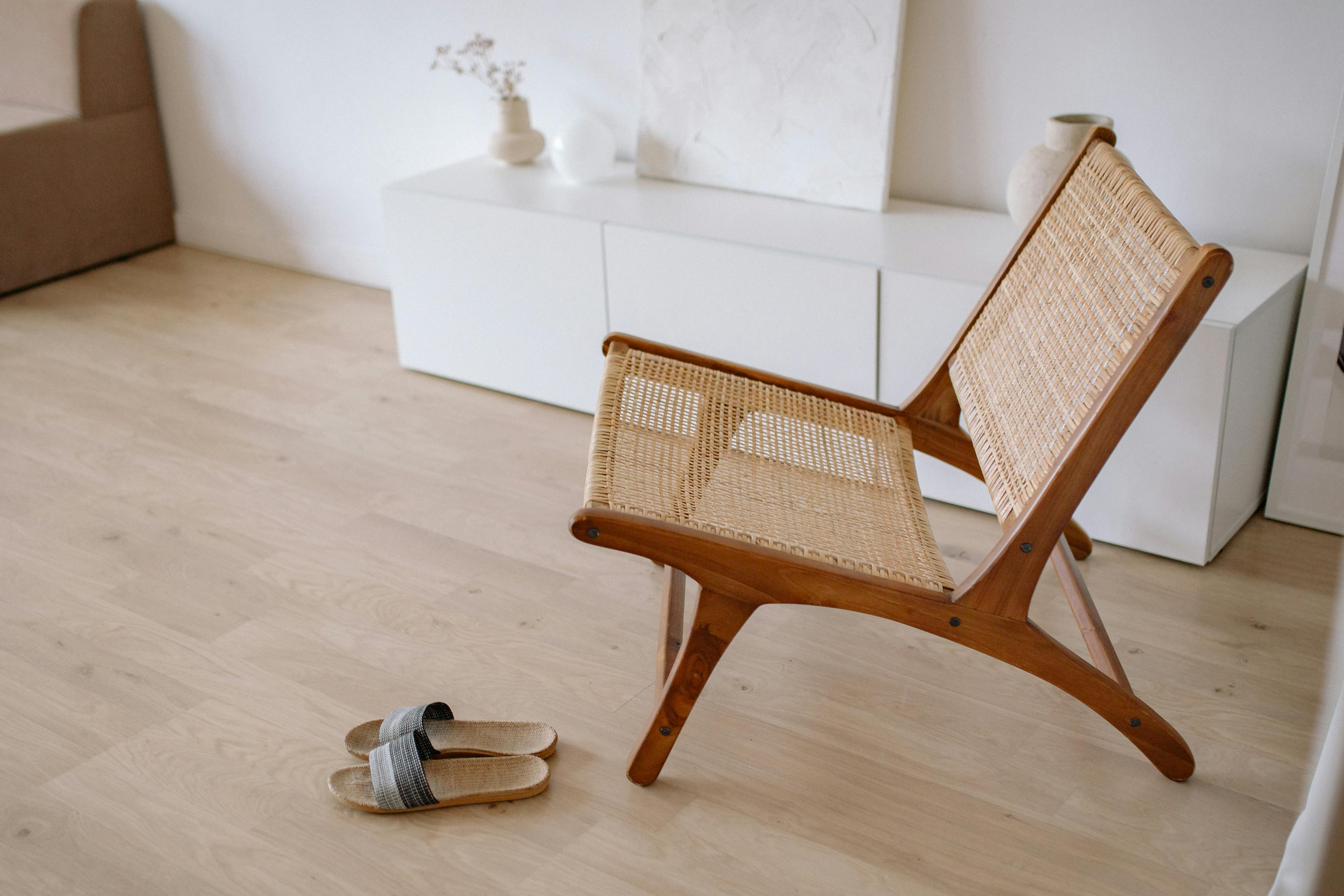
Rattan is a multi-sensory experience. The intricacy of its woven strands. Its muffled rustle as you settle into it. The way it conforms to the body.
It has long been in our homes, in design magazines, and on our social media feeds. It feels familiar. Yet rattan remains surprisingly unfamiliar. Most people know what it looks like, but very few know what it actually is. At worst, it is misunderstood.
To truly understand rattan, we ought to discover a remarkable botanical specimen, an extraordinary tradition of human craftsmanship, and a material that bridges the wild complexity of tropical rainforests with the quiet rituals of daily domestic life.
The Botanical Paradox: A Vine That Climbs the Canopy
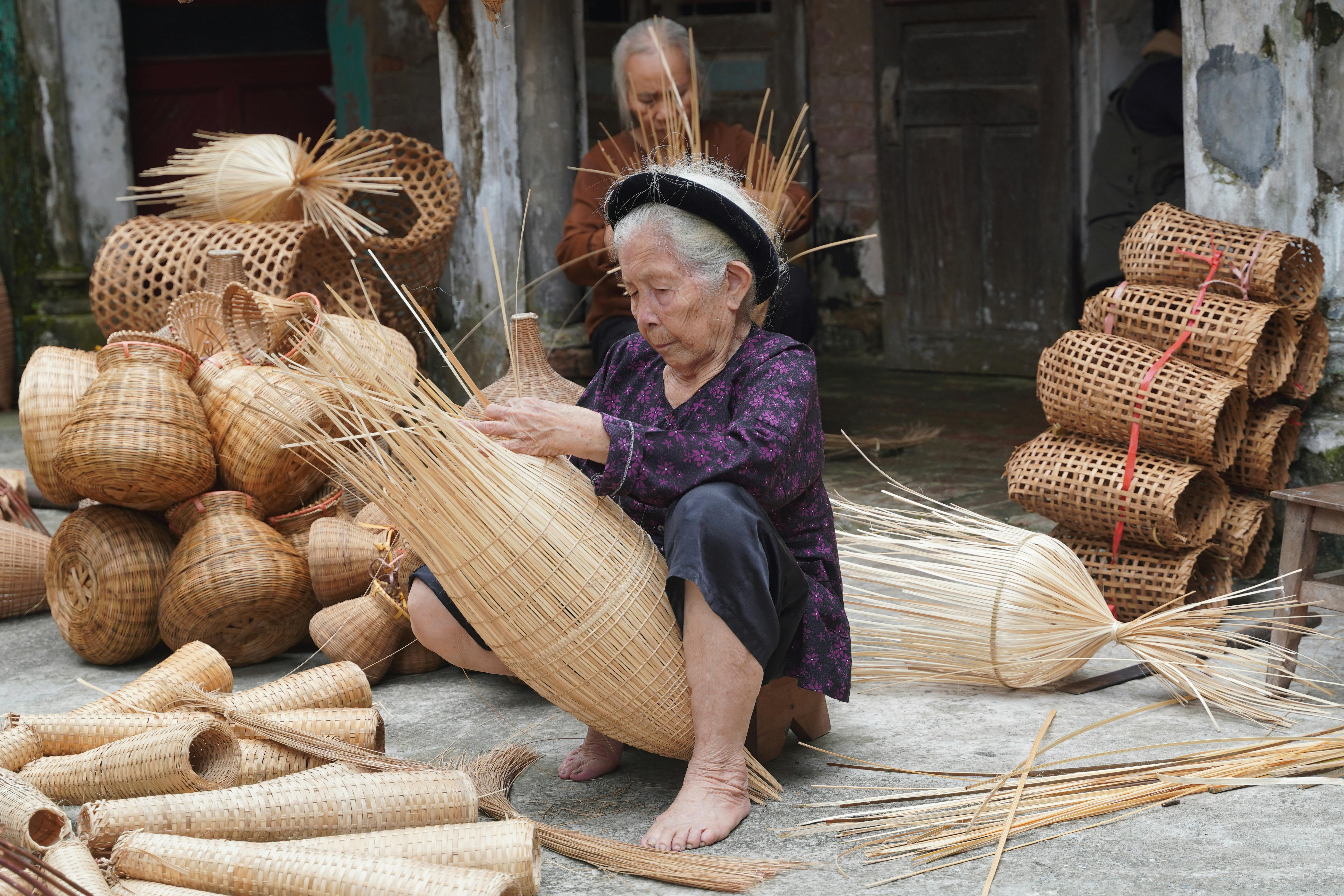
People have been splitting, weaving, and bending rattan into baskets, fish traps, and furniture for centuries. The contradiction of a slender vine strong enough to build a bridge while still being supple enough to be woven into a chair-back is what makes the whole story of rattan fascinating. It is a material defined by tension between opposites: flexible yet strong, humble yet increasingly precious, ancient yet perpetually "back in style." To understand why rattan furniture keeps returning to fashionable interiors decade after decade, it helps to start with what the plant actually is, and why nature built it the way it did.
Rattan is not a hardwood tree. Botanically, it belongs to the palm family, Arecaceae, which encompasses roughly 300-600 species. These species are found in Asia, Africa, and Australasia. And they vary enormously. Some produce slender stems like a pencil, perfect for delicate weaving. Others develop canes several centimeters in diameter, strong enough to become structural components in home decor and even construction. Species vary in texture, color, and growth rate depending on local climate, soil conditions, and forest ecology.
Broadly, rattan is a woody climbing vine that relies on the dense structure of tropical rainforests to survive. From the forest floor, the rattan vine sends out thin shoots armed with sharp, recurved spines and hooks that latch onto the surrounding trees, allowing the vine to haul itself upward toward the sunlight. Some species are reported to grow longer than 150 meters—making certain rattan vines among the longest plants on Earth.
Because the stem must bend without breaking as it twists around trees, it develops an extraordinary combination of flexibility and strength. It is dense enough to support weight, yet elastic enough to withstand movement. This is enabled by its porous, honeycomb-like network of longitudinal vascular bundles that distribute stress evenly. These qualities, honed through evolution, eventually make it one of humanity's most useful natural materials.
Rattan, Cane, Bamboo and Wicker: Untangling The Comedy of Errors
- Rattan is the whole plant.
- Cane refers specifically to the smooth, glossy outer skin of the rattan stem. It is ideal for weaving. It is commonly used to make furniture.
- The remaining inner core of the rattan stem, once the cane has been stripped off, is called reed, and it is often used for coiled, woven work.
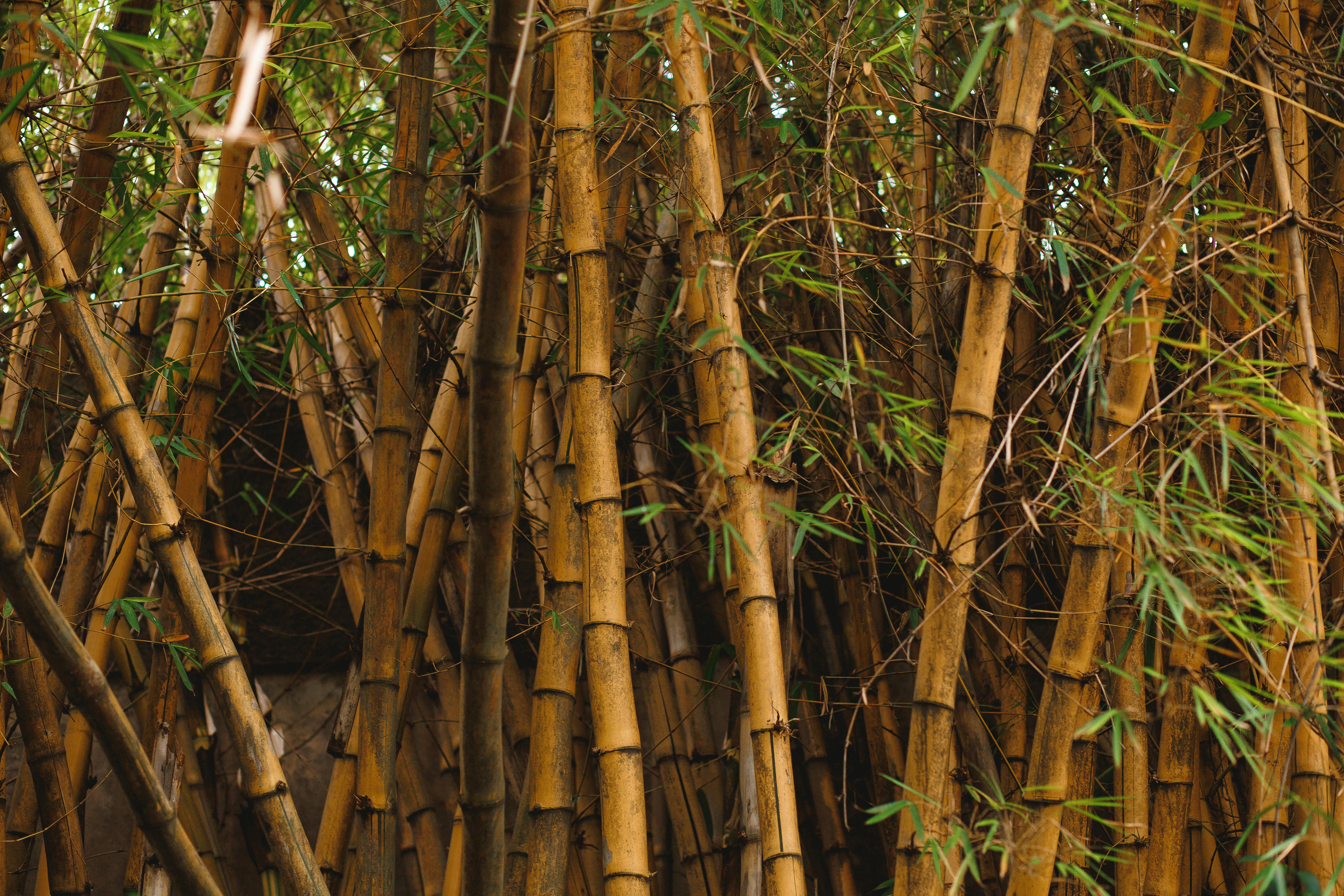
- Bamboo, on the other hand, is a completely different plant. It belongs to the grass family, growing upright in hollow segmented culms, and relies on rapid growth rather than climbing.
- Lastly, wicker itself is not a material—it is a technique, a method of weaving that can be done with a variety of materials, such as rattan, cane, reed, willow, or even synthetic fiber. The word describes how something is made, not what it is made from.
Rattan’s versatility is evident in its kinship with these other natural fibers—cane, bamboo, and palm leaves—each bringing its own character to woven crafts. The prevalence of these materials reflects humanity’s fascination with bending nature to our needs.
A History Older Than Most Wood Furniture
The presence of rattan in human habitations spans millennia, tracing trade routes, imperial conquests, and shifts in architectural philosophies across the globe.
Archaeological and historical evidence points to woven rattan and cane seating in ancient China as well as in ancient Egypt and other parts of Southeast Asia. There was a very practical reason for this: in hot, humid climates, a taut cane seat let air circulate beneath the sitter, making it far more comfortable than an upholstered cushion.
Rattan, eventually, traveled across the globe largely through trade networks, finding purpose in packaging, luggage, furniture, fashion, and more.
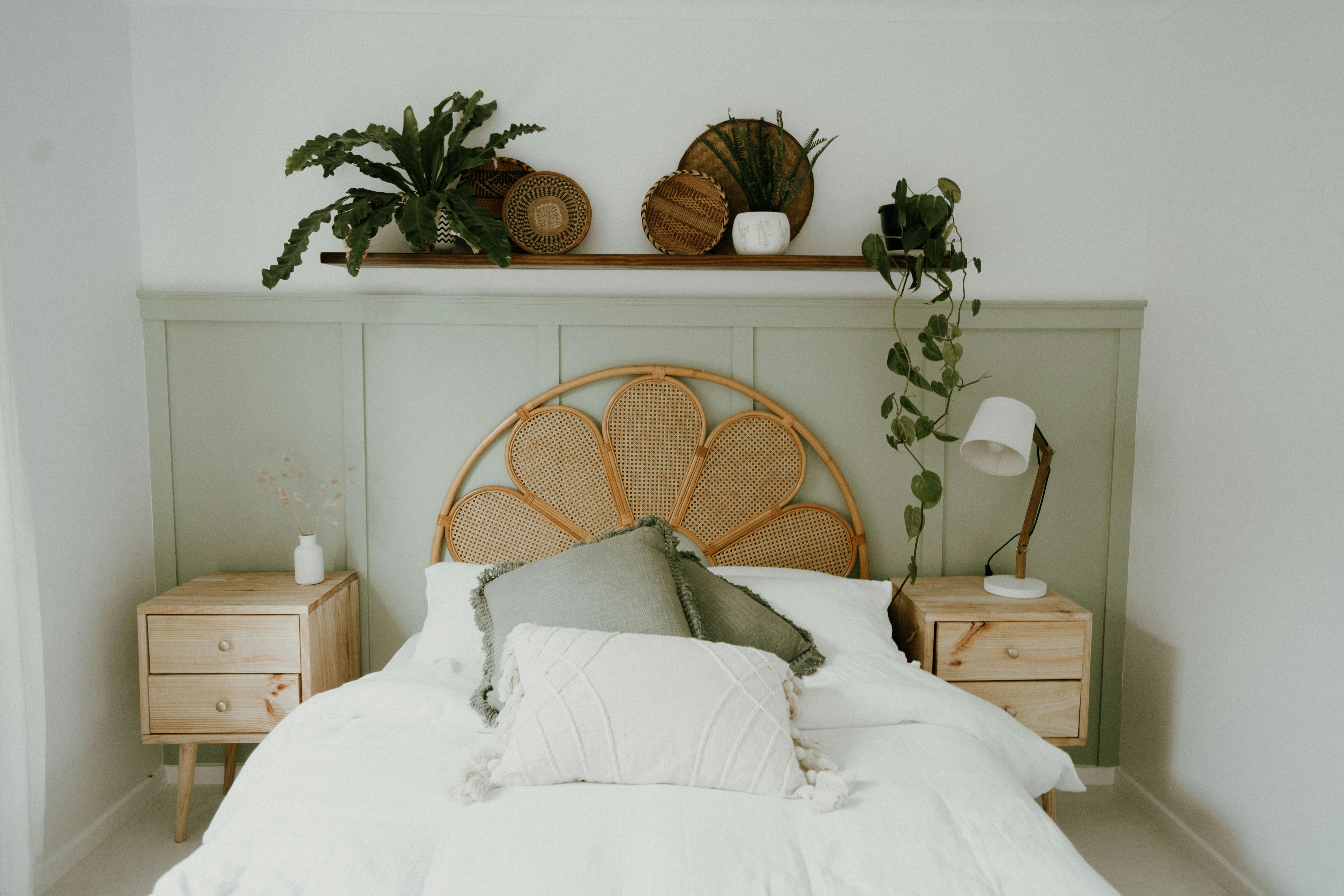
The material is easily adaptable to different design trends. Across periods when ornamentation was preferred, rattan was shaped into ornate designs. For the same reasons, it molded itself into more functional, utilitarian, bohemian, eclectic, and minimalist design eras as well.
At times, rattan itself became an instigator or at least played its role in instigating a change in design philosophy. In the 17th century, it introduced a lightness to Renaissance and Baroque patterns. The same happened in the 20th century with heavy, dark Victorian interiors. More recently, it introduced an appreciation of nature, slow production, handmade craftsmanship in times when industrial, machine-made, mass-produced is more economical and ubiquitous.
Thus, how rattan appeared in different centuries varied. But rattan continued.
From Rainforest Canopy to Floor: The Craft Behind Rattan Furniture
The journey of rattan from an impenetrable Southeast Asian jungle to a refined interior piece is a labor-intensive process that has remained largely unchanged for generations.

Most of the world’s raw rattan originates in the tropical forests of Indonesia, with additional species harvested across other countries primarily in Asia and Australasia. Unlike industrial timber plantation management, wild rattan harvesting relies almost entirely on the localized knowledge of indigenous and rural forest communities.
- Harvesting: Rattan vines can take five to seven years to reach harvestable length. It is culled at stages that minimize waste and protect regrowth. Experienced harvesters judge maturity of the vines by diameter, color, flexibility, and surface texture—knowledge acquired through years of observation. It is a reminder that craftsmanship often begins long before an artisan enters the workshop. The vines are cut near the base and the spine-laden stem is pulled down from the high canopy—a physically demanding task.
- Curing and Oil-Smoking: The cut vines are trimmed into manageable lengths and brought to collection depots. Here, they undergo curing. Depending on local traditions and the intended use, the vines may be washed, dried, smoked, boiled, or treated with natural or modern preservation methods to reduce moisture and discourage insects and fungi. Proper curing tenderizes the fiber without breaking its integrity, helping it to resist cracking and warping.
- Drying and Sorting: If too much moisture remains inside the cane, furniture may lose shape or split later. If it is dried too aggressively, however, flexibility is lost. Finding the right balance requires experience. In many traditional workshops, drying still relies on careful observation of weather, humidity, and airflow rather than sophisticated machinery. The vines are often propped up in teepee-like frames to dry under the tropical sun. The process can take days or even weeks. The goal is not speed. It is stability. Workers then sort the raw rattan by diameter, color consistency, and structural integrity.
- Processing: Some poles are left intact to serve as structural frames for furniture. Others are run through machines that slice off the glossy outer bark—yielding ribbons of cane—while leaving behind the fibrous inner core, which is peeled into smooth round rods of reed.
- Bending and shaping: Heat and moisture make rattan more pliable. At the right temperature and moisture, the stem is bent around carefully shaped forms or jigs that establish the desired curve. As it cools down, the new shape becomes permanent. The mastery lies in controlling tension and curvature. The process resembles neither sculpting nor carving. It is closer to persuasion.
- Weaving: Woven rattan may appear merely decorative. But it performs complex structural work. A properly tensioned woven surface distributes weight across multiple intersecting strands. Instead of concentrating pressure at a few rigid points, the weave spreads it across the entire area. This dispersal of pressure eliminates the hard pressure points created by many solid surfaces. This is one reason well-made woven furniture often feels comfortable without thick upholstery or cushioning. Different weaving techniques—plain weave, wicker-like interlaces, herringbone, and countless local patterns—also impart different textures, strength, and support.
- Joining: Where rattan poles intersect, traditional joinery techniques are reinforced with cane wrapping. Because rattan lacks the uniform wood-grain structure required for traditional mortise-and-tenon joints, artisans secure intersections with hidden steel screws or wooden dowels, then tightly wrap the joint in wet cane peel. As the wet cane ribbon dries, it shrinks slightly, binding the structural joint together like a natural clamp.
- Finishing: Surfaces are treated with oils, waxes, or clear finishes that enhance color and protect fibers without masking the natural grain.
This modern supply chain of rattan involves multiple hands: from those who grow, harvest, process, weave, and design it. This sequence is a narrative of collaboration across lands and cultures.
Why Rattan Furniture Looks and Feels the Way It Does
Modern construction relies on many building materials—glass, plastic, metals, concrete. These materials are efficient, durable, and beautiful in their own way. Yet many people are instinctively drawn to other materials like wood, stone, linen, wool, ceramics, and woven fibers. The preference is not merely aesthetic.
Environmental psychologists have long observed that people tend to respond positively to materials that remind them of the natural world. Researchers continue to study why this happens, but one influential idea is known as biophilic design—the notion that humans possess an innate tendency to seek connections with nature because our species evolved within it.
This doesn't mean every room should resemble a forest. Rather, subtle reminders of nature—organic shapes, irregular textures, natural light, and materials that visibly age over time—can make interiors feel calmer and more restorative.
Rattan embodies many of these qualities simultaneously. Its color recalls dried grasses and warm earth. Its woven surfaces cast delicate shadows that change throughout the day. The curved shapes of rattan lend an organic touch to mostly geometric rooms with harsh angles. The natural give of a woven chair makes it feel supportive without being rigid.
Another point of consideration is that texture matters significantly in interiors. A room built entirely from smooth, hard, reflective surfaces — glass, lacquer, polished stone — tends to feel formal, rigid, even a little unforgiving—uninviting. Perhaps this is because these smooth surfaces tend to mostly reflect light and air. They are unperturbed by much of what they interact with.
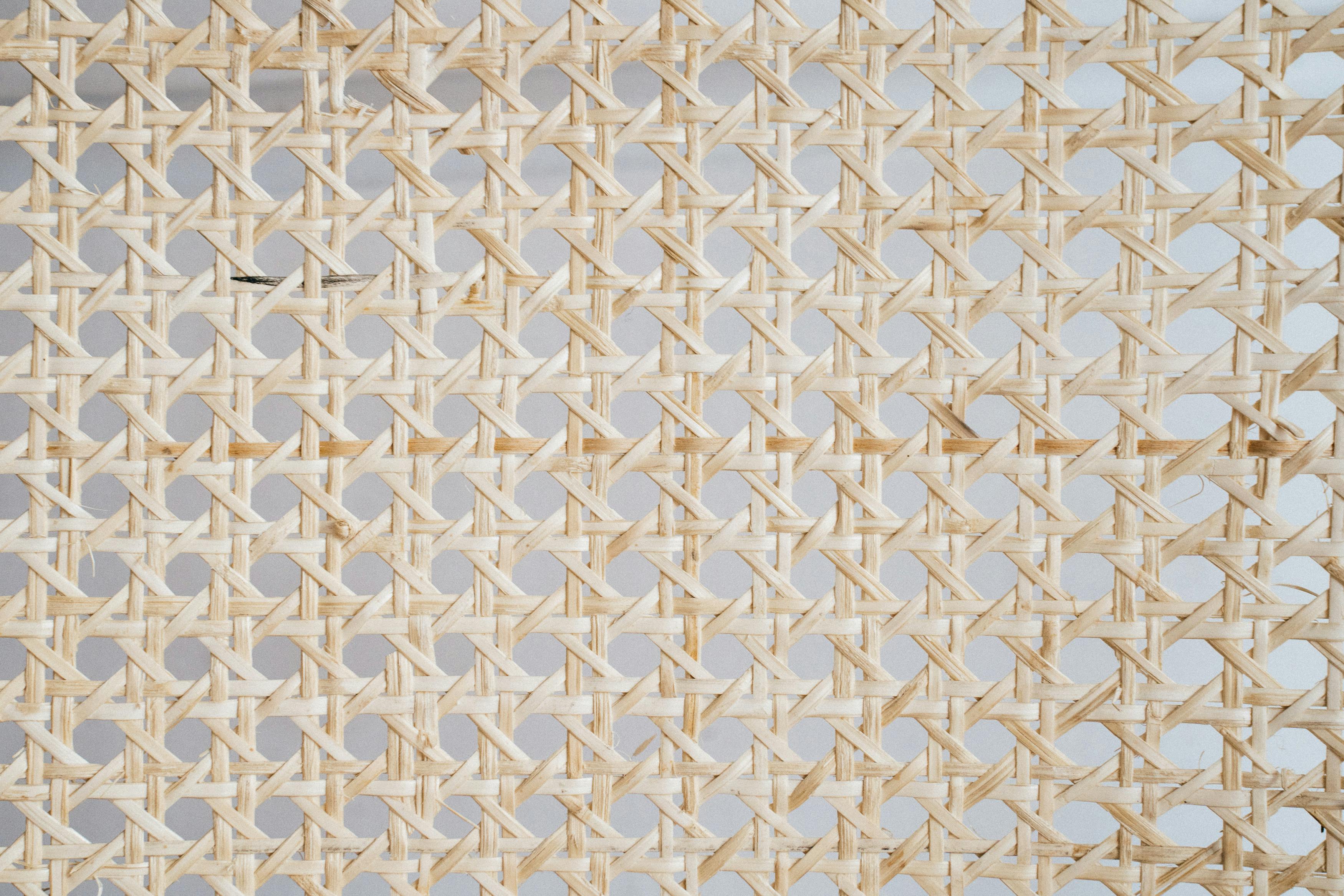
A woven surface behaves differently. Light and air filter through gaps in the weave, rather than being reflected. The solid, yet perforated surface also ensures that the material does not create a separation. It is one with its surroundings.
The Endurance of a Remarkable Material
Every few decades, design magazines declare that rattan has made a comeback. There is some truth to that. Interior styles shift. Materials fall in and out of fashion. But describing rattan as a "trend" misses the larger picture. Rattan has never truly disappeared. It has simply drifted in and out of the spotlight.
Its contemporary resurgence reflects a deeper structural shift in how people live. Modern living spaces are increasingly compact, multifunctional, and urban. In these environments, heavy, monolithic furniture can feel overwhelming and oppressive. Rattan’s porous texture and lightweight nature make small spaces feel larger and more unrestricted.
In these small modern spaces, rattan offers another advantage. Woven surfaces do not reflect sound waves in harsh, parallel lines like glass or polished concrete. The weave and texture act as a natural acoustic dampener, softening echoes and contributing to a quiet indoor atmosphere.
Rattan is an antidote to the industrial manufacturing’s ideals of perfectionism. It is neither smooth nor uniform and certainly no two pieces are identical.
Perhaps one of the greatest lessons that rattan offers is that good materials rarely become obsolete. They simply wait for each generation to rediscover what earlier generations already knew.
Exploring Woven Craftsmanship in Modern Homes
In the end, rattan is not merely a material—it is a resolve to live well with natural resources; a reminder that furniture can be both an aesthetic and functional choice. Rattan braids together nature’s generosity and human craftsmanship—making spaces that feel honest, humane, and deeply, almost silently, luxurious. That is the lasting value of rattan in interiors: a material that teaches us to slow down, notice details, and inhabit our rooms with care.
If you'd like to see how these ideas take shape in modern homes, explore our curated Benable collection of woven chairs. It brings together a range of thoughtfully selected designs—including several beautiful rattan pieces—that showcase the versatility, warmth, and craftsmanship discussed throughout this article.
Disclosure: Some links in this post may lead to curated shopping collections where I may earn a commission if you make a purchase, at no extra cost to you.


Comments
Post a Comment